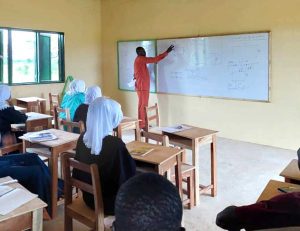
A new school year has begun in Saguli — and it brings several important developments with it. For the first time since the founding of our remedial class program, two classes are being taught in parallel this year. This allows us to reach even more students and give them the opportunity to obtain a secondary school graduation.

This important step has been made possible by the expansion of our infrastructure last year, during which the school building was extended with an additional classroom and a library.
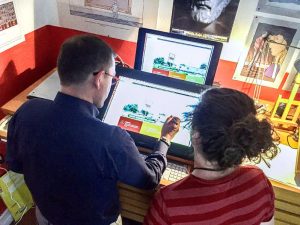
At the same time, we remain committed to our proven hybrid teaching model, which combines digital learning through educational videos with traditional classroom teaching and has already proven highly effective in recent years.
Interest in the program is high: a total of 64 students have enrolled this year. They are being taught by two trained teachers in the subjects of English, Mathematics, Science, and Social Studies, and are being specifically prepared for the WASSCE final examinations.
With the beginning of the new school year, we are also turning our attention to another important project: our library is expected to become operational very soon. It will provide students with access to urgently needed textbooks while also offering a quiet place to study — something that is hardly possible for many of them at home.
To bring the library to life, we continue to rely on support. Donations help us purchase the necessary books and sustainably improve local learning conditions.
We are very happy about the successful start to the new school year — and look forward to continuing to support our students on their educational journey.
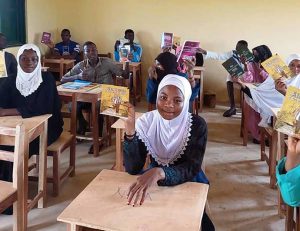 The English master drew the attention to one aspect of the english syllabus which required the reading and studying of selected litrature books for the final English WASSCE paper. Failure to read this books highly reduces the chances of passing the English paper since the questions on them constitute a greater marks in the exams. That’s why in total 90 literature books by three different authors were purchased and allocated to the students.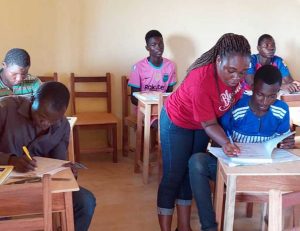
 After eight months of construction and many years of preparation, the Ghbalahi remedia school in Taha was able to commence classes in April. Due to the Corona pandemic, the start of school in the whole of Ghana had been postponed to January 1. However, since our school is still privately owned, we were able to determine the start date individually and thus ensure that a well-thought-out hygiene concept could be enforced.
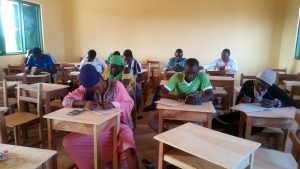 The school has now started for 21 students aged 15 to 18 who have not passed their SHS (Secondary High School; comparable to the German Gymnasium) final examinations and therefore do not have a degree. They now have the opportunity to obtain one. In addition, students who do not have the chance to attend a SHS because the nearest school is too far away are also taught here. With targeted instruction and tutoring by trained teaching staff, they are specifically prepared for the final exams in the core subjects of mathematics, English and science.
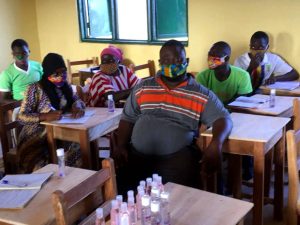 Due to the ongoing pandemic, we developed a hygiene concept based on the guidelines of the Ghanaian government in order to be able to create a safe learning environment. Before classes begin, all participants must wash their hands thoroughly. Afterwards, the temperature is measured with a so-called “temperature gun”, a contactless thermometer. Only when the temperature is safe the students are allowed to enter the classroom. Masks are mandatory in the entire building. In addition, the rooms are cleaned daily. Masks and disinfectants were provided by the association.

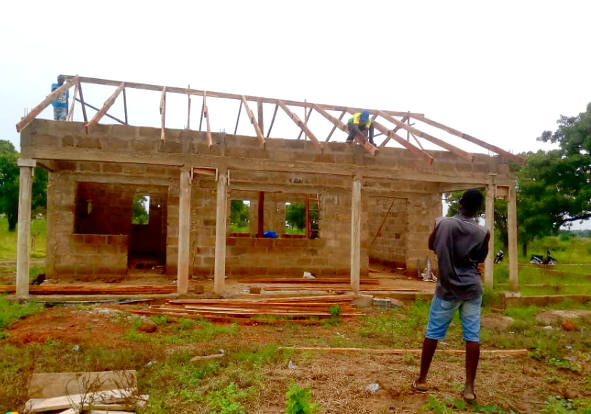

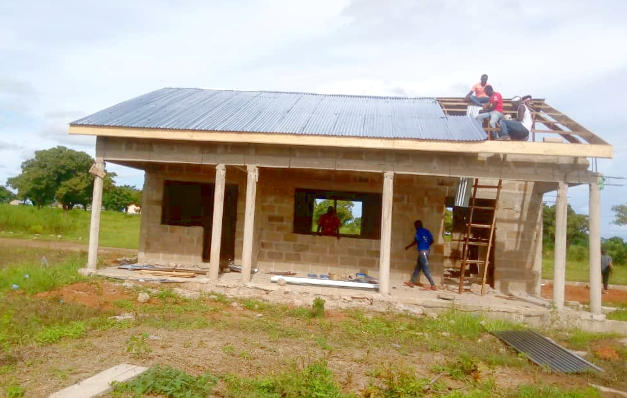
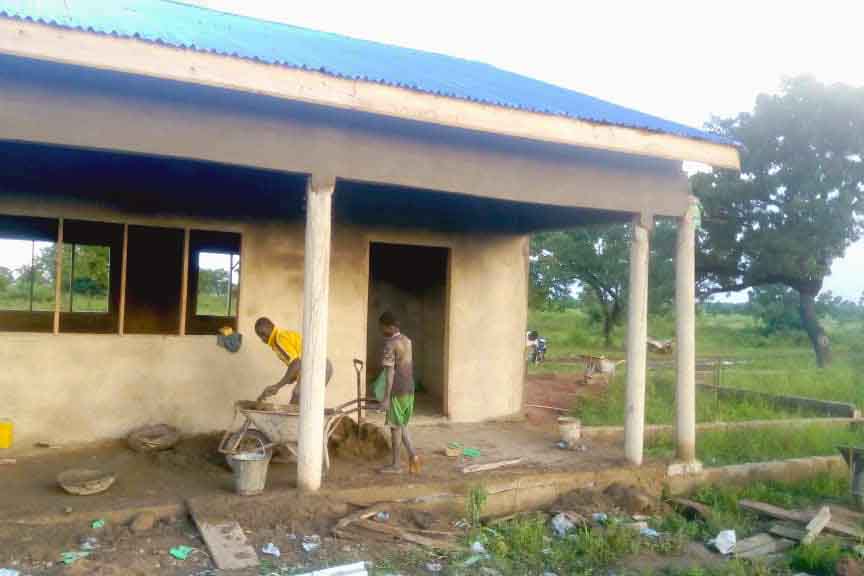


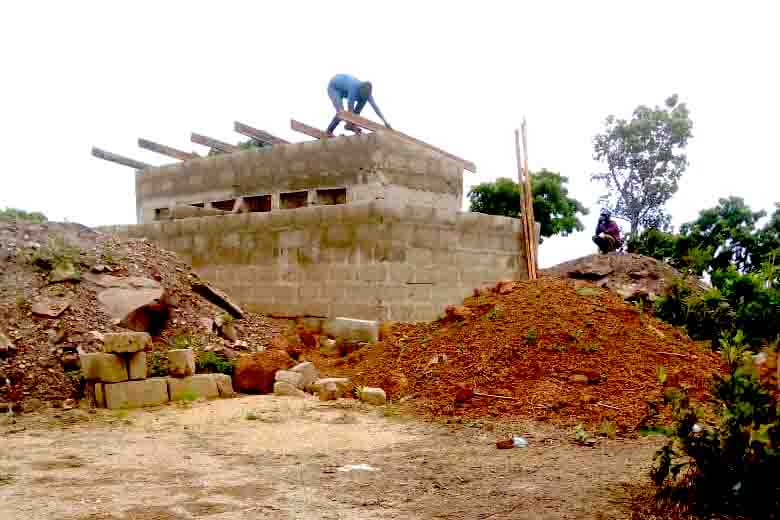
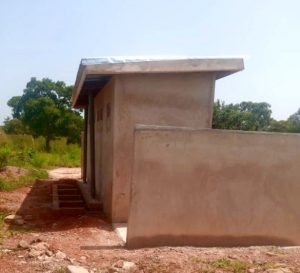 The toilets are our second construction site and here it was almost the same as with the classroom – just in a smaller scale: First, the walls had to be raised. Doing so, four separate booths were built and one wall surrounding it. On top of the booths likewise a wooden roof truss was built and rounded off with a corrugated sheet roof. Finally, everything was plaster and the toilet house waits along with the classroom building for its paint. We will report on this soon.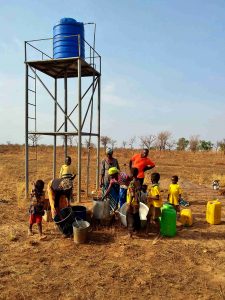
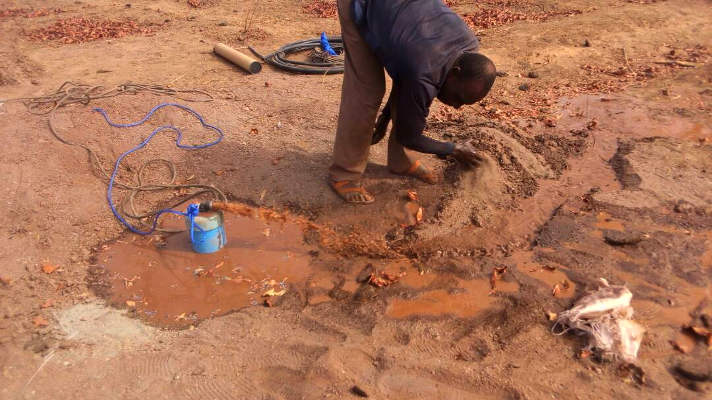
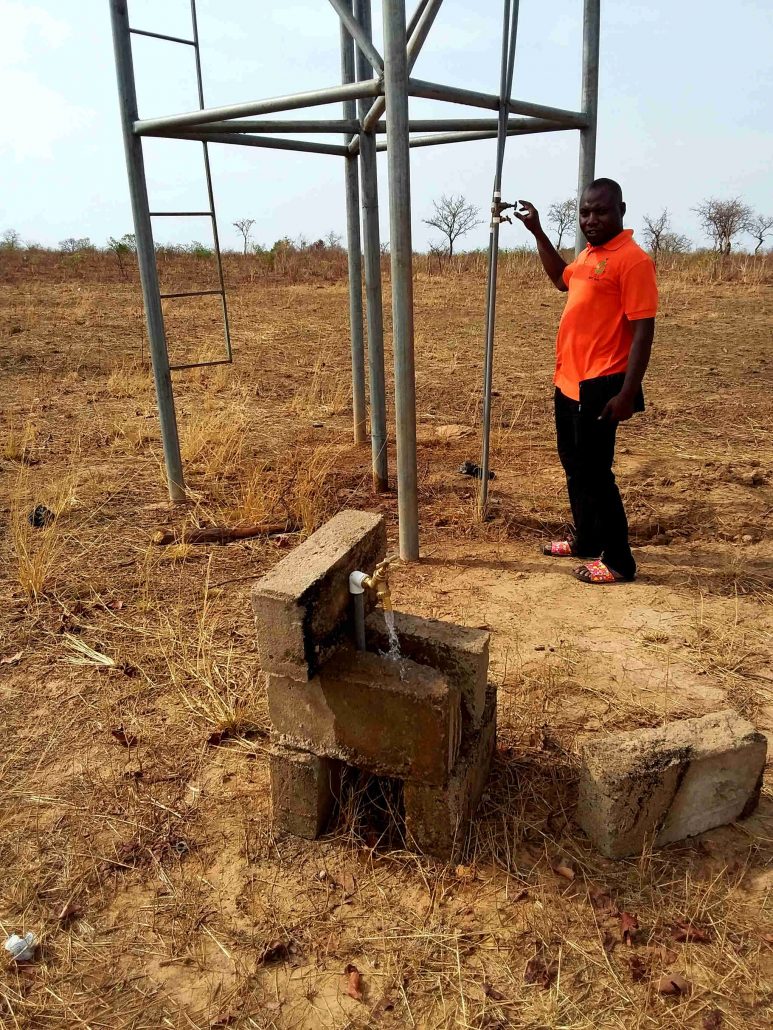
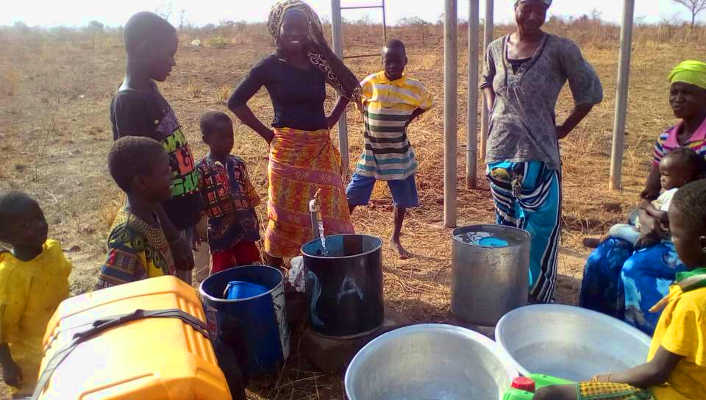
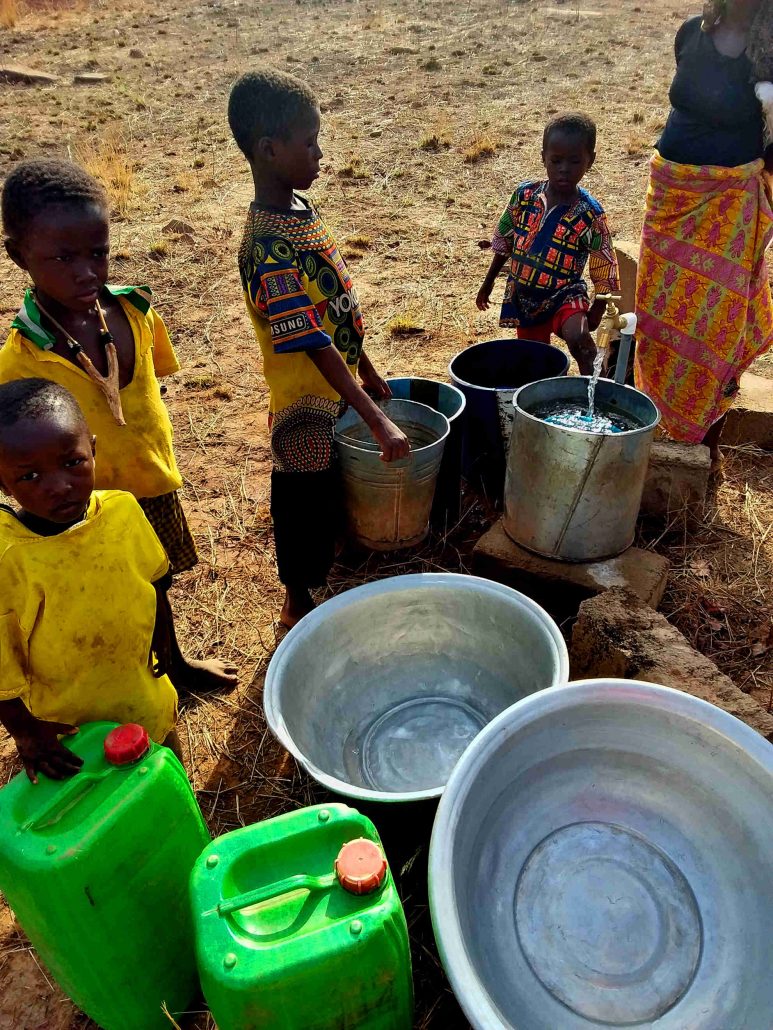
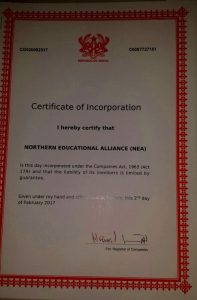
 Already during the construction of the borehole we founded a committee which was in charge of handling and maintaining it. The same we wanted to do this time with an educational committee which should promote education among the community members. Altogether we applied for funding by the W.P. Schmitz foundation for this project. However they currently have so many things to work on that the earliest time point they can examine it is in January. So we still hope that they will grant it.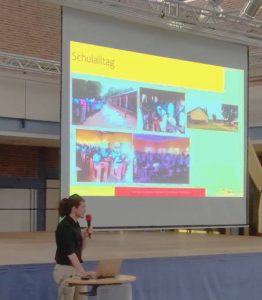


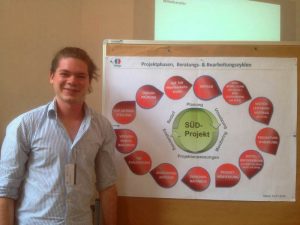 ations and what has to be considered, especially in other countries. Christoph also received many other valuable tips on project work and was able to exchange ideas with representatives of other associations and establish contacts. The goal for the new year is therefore to structure the work in Ghana even better and to work sustainably on site. For this reason, a water committee and an education committee have been set up in Ghana to monitor progress and problems and to ensure the long-term success of the project.